

Sourcing
Where it comes from matters everything.
Every piece of meat we deliver carries a complete story, from the specific field it grazed, to the breed of animal, to the name of the farm. This is not marketing. It is the minimum standard we hold ourselves to.
Traceability
Named farms. Known animals.
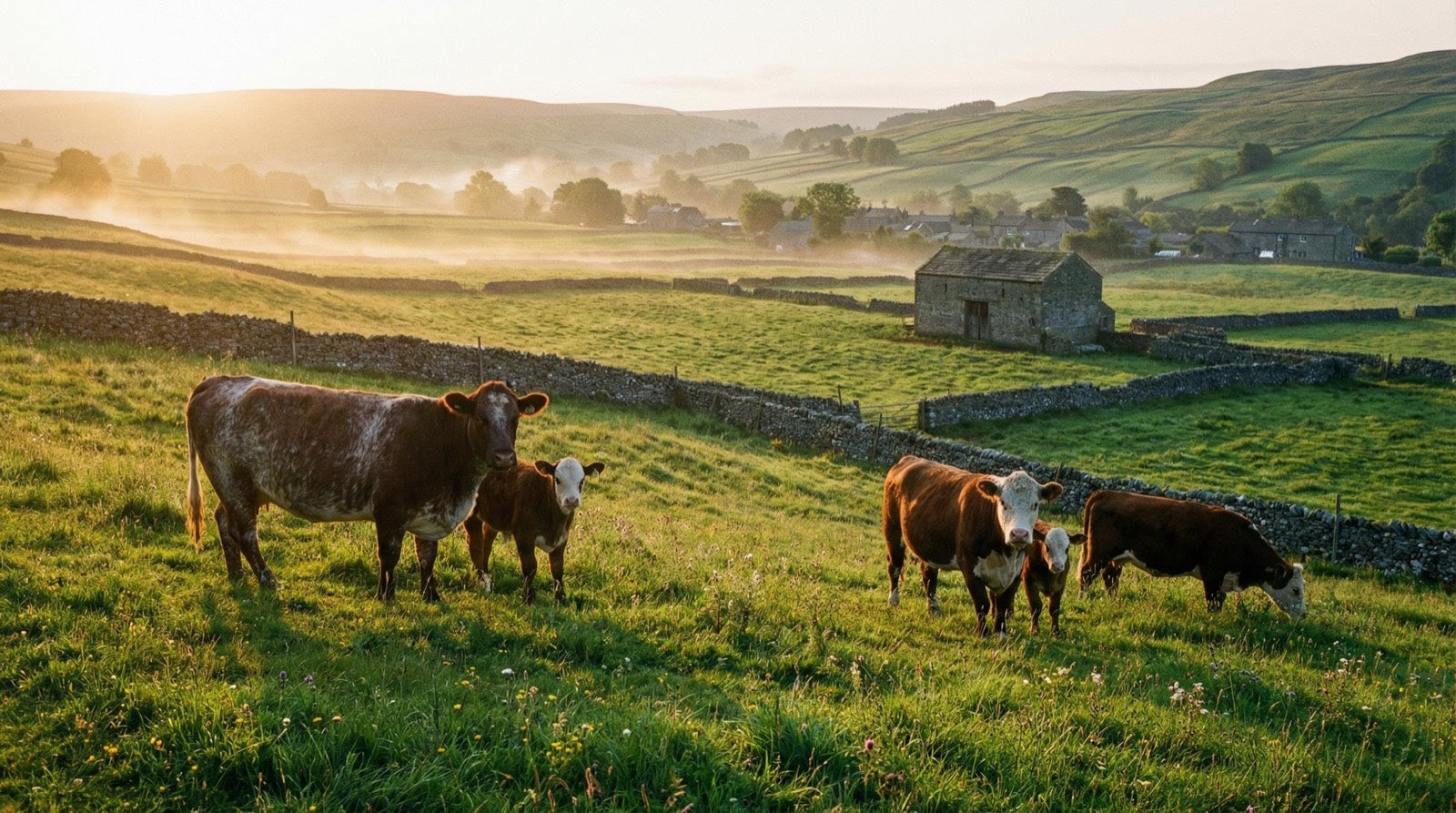
Every cut comes from a named British regenerative farm that we know and visit. Your provenance card and pack QR code identify the farm, breed and pasture, so you always know exactly what's on your plate. Meet the people behind it on The Farms page.
Ashfold Farm Provenance
- Farm
- Ashfold Farm, Bowland
- Farmer
- Esther Lockwood
- Breed
- Belted Galloway
- Age at harvest
- 32 months
- Pasture
- Upland rough grazing & woodland
- Dry-aged
- 28 days on the bone
Regenerative Farming
Beyond sustainability. Actively restorative.
Soil Health
Regenerative grazing builds organic matter in the soil, increasing its capacity to store carbon, retain water, and support the microbial communities that make healthy pasture possible. Every farm in the Butcher Ben network manages its grazing with soil health as the starting point.
Biodiversity
Our farms make room for nature, restoring hedgerows, wildflower meadows and wet corners alongside their grazing. That gives ground-nesting birds like curlew and lapwing, disappearing from much of Britain, somewhere to breed.
Water Quality
Healthy, well-structured soil soaks up rain and filters it naturally, slowing run-off from fields into the rivers downstream. It's one of the quiet benefits of farming for soil health first.
Animal Welfare
Our animals live genuinely natural lives. They graze on diverse pastures, handled by farmers who know them. None are given antibiotics as a matter of routine, and every farmer works with small, traditional abattoirs close by, keeping journeys short and handling calm. That's what high-welfare means in practice.
Carbon Sequestration
Grassland stores carbon in its soil, and how you graze decides whether that store grows or shrinks. Our farms manage grazing to build soil organic matter: carbon, held underground.
Nutritional Superiority
Meat is a product of what an animal ate and how long it lived. Ours graze on varied pasture (grasses, herbs and wildflowers) and grow slowly, often reaching twice the age of intensively reared cattle. That diet and that time shape the fat, the flavour and the nutrient density of the meat.
The bigger picture
A Better Future, Slowly
Diversity is nature's greatest strength, and every species has a role, including us. This is our small part in the recovery, built one box at a time.
